
We provide power solutions to various customers in different industries. Explore our products range below
If you need more information, please contact us
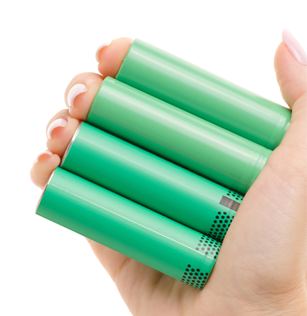
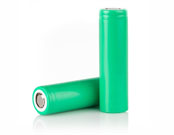
The 18650 battery is a lithium-ion cell classified by its 18mm x 65mm size, which is slightly larger than a AA battery. They’re often used in flashlights, laptops, EVs, E-bikes and high-drain devices due to their superior capacity and discharge rates. 18650s come in both flat and button top styles, and usually boast 400-500 charge cycles. Just to give an example Tesla model S has around 7000 of these 18650 cells which powers its drivetrain.
Most 18650 batteries will last between 400 and 500 charge cycles, but battery lifetime can be extended far beyond those numbers if charged regularly before complete discharge. All batteries degrade over time, but you’ll often get over a year or two of life from an 18650 depending on your use. it is very reliable and boasts an excellent cost per kilowatt hour.
The use of lithium ion, li-ion batteries has grown significantly in recent years. They offer some distinct advantages and improvements over other forms of battery technology.
There are many advantages to using a li-ion cell of battery. As a result the technology is being used increasingly for a huge number of widely varying applications. Everything from small electronic devices, through smartphones and laptops to vehicles and many other applications. The advantages of Li-ion technology mean that these batteries are finding an increasing number of applications, and as a result a huge amount of development is being invested into them.
Explore the li-ion battery advantages below :
The high energy density is one of the chief advantages of lithium ion battery technology. With electronic equipment such as mobile phones needing to operate longer between charges while still consuming more power, there is always a need to batteries with a much higher energy density. In addition to this, there are many power applications from power tools to electric vehicles. The much higher power density offered by lithium ion batteries is a distinct advantage. Electric vehicles also need a battery technology that has a high energy density.

One issue with many rechargeable batteries is the self discharge rate. Lithium ion cells is that their rate of self-discharge is much lower than that of other rechargeable cells such as Ni-Cad and NiMH forms. It is typically around 5% in the first 4 hours after being charged but then falls to a figure of around 1 or 2% per month.
One major lithium ion battery advantage is that they do not require and maintenance to ensure their performance. Ni-Cad cells required a periodic discharge to ensure that they did not exhibit the memory effect. As this does not affect lithium ion cells, this process or other similar maintenance procedures are not required. Likewise lead acid cells require maintenance, some needing the battery acid to be topped up periodically.
Fortunately one of the advantages of lithium ion batteries is that there is no active maintenance required.
The voltage produced by each lithium ion cell is about 3.6 volts. This has many advantages. Being higher than that of the standard nickel cadmium, nickel metal hydride and even standard alkaline cells at around 1.5 volts and lead acid at around 2 volts per cell, the voltage of each lithium ion cell is higher, requiring less cells in many battery applications. For smartphones a single cell is all that is needed and this simplifies the power management.
The load characteristics of a lithium ion cell or battery are reasonably good. They provide a reasonably constant 3.6 volts per cell before falling off as the last charge is used.
Some rechargeable cells need to be primed when they receive their first charge. One advantage of lithium ion batteries is that there is no requirement for this they are supplied operational and ready to go.
There are several types of lithium ion cell available. This advantage of lithium ion batteries can mean that the right technology can be used for the particular application needed. Some forms of lithium ion battery provide a high current density and are ideal for consumer mobile electronic equipment. Others are able to provide much higher current levels and are ideal for power tools and electric vehicles.